
Insurance plays a crucial role in financial protection—whether it’s health, motor, life, business, or property insurance. But one question almost every policyholder asks is: “How is my insurance premium calculated?â€
Understanding how insurers compute premiums helps you know what you’re paying for, why you’re paying it, and how to potentially lower your costs. This article breaks down, in simple language, the factors and formulas behind insurance premiums.
What Is an Insurance Premium?
An insurance premium is the amount of money you pay to an insurance company in exchange for coverage. It can be paid yearly, quarterly, monthly, or sometimes as a one-off payment.
It is calculated based on the probability of risk, the level of coverage, and several personal or business-related factors. Essentially, the premium reflects:
·      How likely you are to make a claim
·      How expensive such a claim would be
·      How much protection you want from the insurer
Insurance is a risk-sharing business, and premiums are the tool companies use to make sure they can compensate clients when claims arise.
Why Do Premiums Differ Between People?
Two people can insure similar cars or houses, yet pay very different premiums. This is because insurers don’t only look at the insured asset—they also evaluate the risk profile of the policyholder.
For example:
·      An experienced driver pays less than a fresh driver.
·      A business located in a safe neighborhood pays less than one in a high-risk area.
Recommended for you
·      A healthy young person pays less for life insurance than someone older or with medical conditions.
In short: insurance premiums are customized, not fixed.
The Key Factors That Influence Insurance Premiums
Insurance companies evaluate several categories of risk before deciding how much to charge. Here are the main factors that apply across most types of insurance:
1. The Level of Risk (Underwriting Risk)
This is the heart of premium calculation. Insurers assess how likely it is that you—based on your profile—might make a claim.
Examples:
·      For motor insurance, risky drivers or high-theft areas increase premiums.
·      For health insurance, pre-existing conditions or lifestyle choices increase premiums.
·      For business insurance, industries with higher accident or liability exposure pay more.
2. The Sum Insured / Coverage Amount
The higher the coverage amount, the higher the potential payout, and therefore the higher the premium.
For example:
·      Insuring a vehicle worth $15,000 costs less than insuring one worth $80,000.
·      A life insurance policy of $20,000 will have a lower premium than a $200,000 policy.
The premium scales with the value the insurer is obliged to pay in case of loss.
3. The Type of Coverage
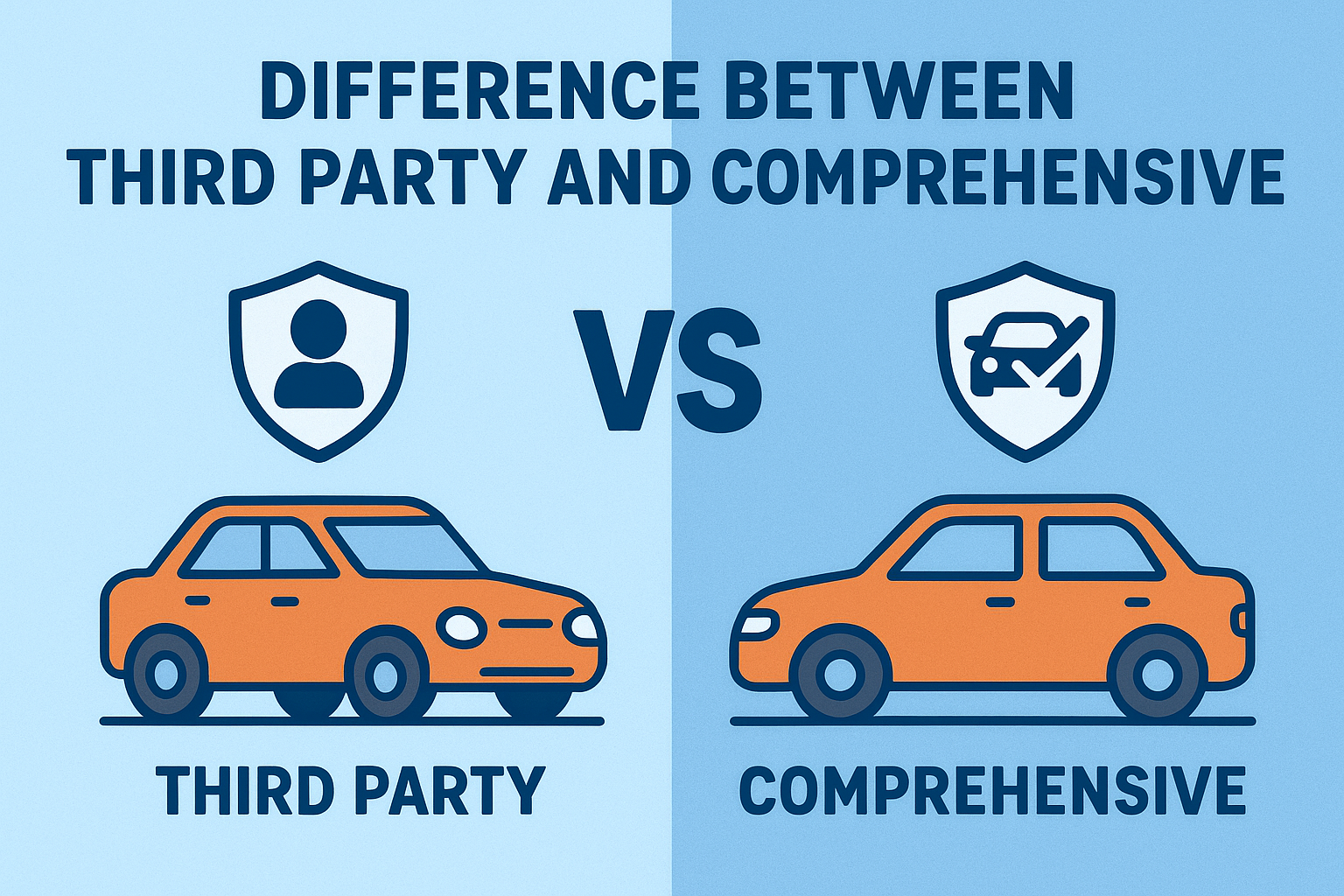
Comprehensive coverage always costs more than basic or third-party-only coverage.
Examples:
·      Comprehensive motor insurance covers theft, fire, third-party liability, accidental damage, etc.
·      Third-party-only covers only damage you cause to others, not to your own car.
More coverage = more cost.
4. Location and Environment
Where you live or operate a business affects your premium.
·      Areas with high crime increase motor and home insurance premiums.
·      Flood-prone or disaster-prone locations increase property insurance costs.
·      Businesses in urban centers often pay more than those in low-risk rural areas.
5. Personal Characteristics (for Life & Health Insurance)
These may include:
·      Age
·      Gender (in some countries)
·      Medical history
·      Lifestyle habits (e.g., smoking, alcohol consumption)
·      Occupation (risky occupations increase costs)
Younger, healthier individuals generally enjoy lower premiums.
6. Claims History
Your past claims behavior is a strong indicator of future risk.
·      If you’ve made several insurance claims, insurers categorize you as a higher-risk client.
·      A clean claim history may earn you a No-Claim Bonus (NCB) or premium discounts.
Insurers reward clients who minimize losses.
7. Discounts, Bonuses & Loadings
Premiums may go up due to loadings or down due to discounts.
Loadings include:
·      High-risk occupation
·      Frequent claims
·      Hazardous location
·      Lifestyle risks (e.g., smoking)
Discounts include:
·      No-claim bonus
·      Security devices (alarms, CCTV, tracking)
·      Bundled policies
·      Loyalty discounts
·      Healthy lifestyle declarations in life/health insurance
How Insurers Actually Calculate Premiums (The Simplified Formula)

Although insurance companies use complex actuarial models, the simplified formula is usually:
Basic Premium = Risk Rate × Sum Insured
Then adjustments follow:
Final Premium = (Basic Premium + Loadings) – Discounts
To make it even clearer:
Final Premium = (Risk Factor × Coverage Amount) ÷ (1 – Discount Rate)
This formula simply translates all risk multipliers and pricing adjustments into a structured calculation.
Example of a Premium Calculation
Let’s assume:
·      Risk factor: 0.04 (4%)
·      Sum insured: $100,000
·      Discount factor: 10% (0.10)
Step 1: Basic Premium
0.04 × 100,000 = $4,000
Step 2: Apply discount
Final Premium = 4,000 ÷ (1 – 0.10)
Final Premium = 4,000 ÷ 0.90
Final Premium = $4,444.44
If there were loadings (e.g., accident-prone area), they would be added before discounting.
How Different Types of Insurance Calculate Premiums
Each type of insurance has its own unique approach. Let’s break it down:
1. Motor Insurance
Factors include:
·      Vehicle value
·      Make/model/year
·      Driver age & driving history
·      Location (high theft or accident zones)
·      Usage (private, commercial, taxi, ride-hailing)
·      Safety features (airbags, ABS, tracking device)
Cars used for commercial purposes pay significantly more than private-use vehicles.
2. Health Insurance
Premium depends on:
·      Age & gender
·      Medical history
·      Lifestyle (smoker/non-smoker)
·      Level of coverage
·      Family or individual plan
·      Pre-existing illnesses
Health insurance premiums increase as age increases because risk of hospitalization also rises.
3. Life Insurance
Important factors:
·      Age
·      Occupation
·      Smoking status
·      Medical condition
·      Length of the policy term
·      Sum assured
The younger and healthier the applicant, the cheaper the premium.
4. Property Insurance
Insurers consider:
·      Value of the building
·      Value of property inside
·      Construction material (brick vs. timber)
·      Fire and security systems
·      Location (flood zones, crime rates)
Buildings in disaster-prone areas carry higher premiums.
5. Business / Commercial Insurance
Factors include:
·      Type of business
·      Annual turnover
·      Number of employees
·      Machinery used
·      Industry risk profile
·      Claim history
·      Legal obligations
Businesses with higher liability exposure pay more.
Can You Reduce Your Insurance Premium? Yes. Here’s How.
Here are practical ways to lower your premiums:
1. Choose a higher excess or deductible
This lowers premiums because you agree to pay part of the claim.
2. Avoid making small claims
This protects your No-Claim Bonus.
3. Install safety or anti-theft devices
Tracking devices, fire alarms, CCTV reduce risk.
4. Maintain a clean driving record
Fewer accidents = cheaper motor premiums.
5. Bundle insurance policies
Many insurers offer discounts for combined policies.
6. Live a healthier lifestyle (for life/health insurance)
Non-smokers save significantly.
7. Shop around and compare insurers
Pricing varies between companies.
Conclusion
Insurance premium calculation may seem complicated, but at its core, it is based on risk probability, cost of coverage, and adjustments for personal or business factors. Understanding these components empowers you to make better decisions, negotiate appropriately, and choose policies that give you the best value.
When you understand how premiums are calculated, you stop seeing insurance as a random charge—and instead see it as a risk-based financial tool designed to protect what matters most.
Â





Comments